whoami
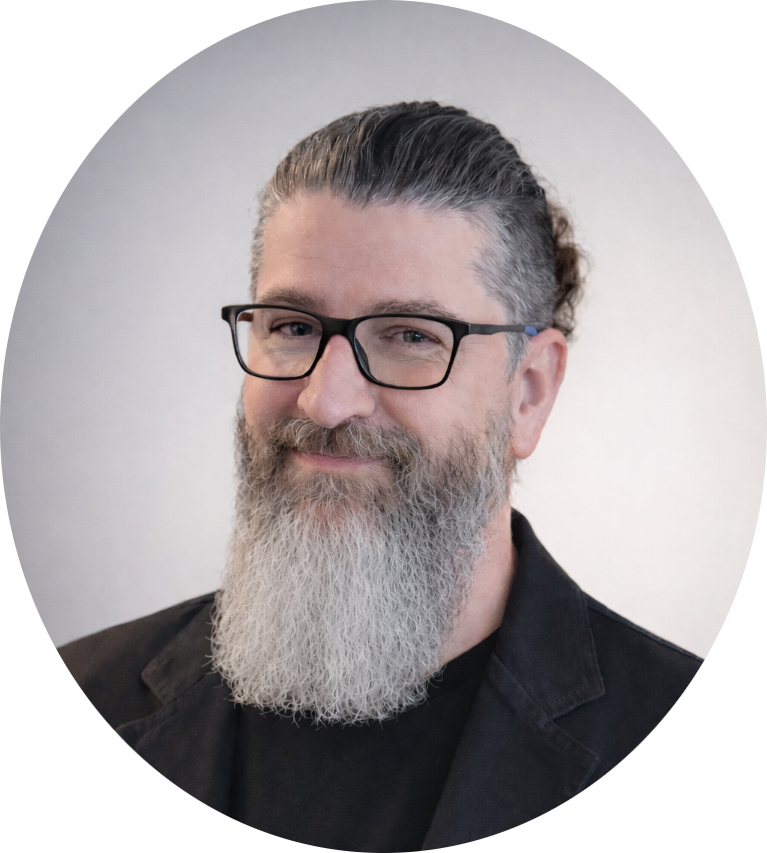
AI Systems Engineer & Consultant — MCP · multi-agent systems · Claude Code
Most AI work I see is demos. I build the other kind — custom MCP servers, multi-agent systems, and autonomous workflows that survive contact with production. Twenty-five years of enterprise IT discipline applied to the layer where most teams get stuck.
what I build
Three custom MCP servers shipped across Node and Python, over stdio and ZeroMQ transports. A few of the things I've put into production:
81
My largest server exposes 81 tools to Claude over the Chrome DevTools Protocol — a full automation surface, not a toy wrapper.
3
A multi-agent architecture where one Claude session supervises another via file-based escalation and an injected URGENT.md hook.
0
An autonomous trading bridge into NinjaTrader 8 over ZeroMQ — every order-placing tool behind a kill switch, every call in a JSONL audit trail.
how I work
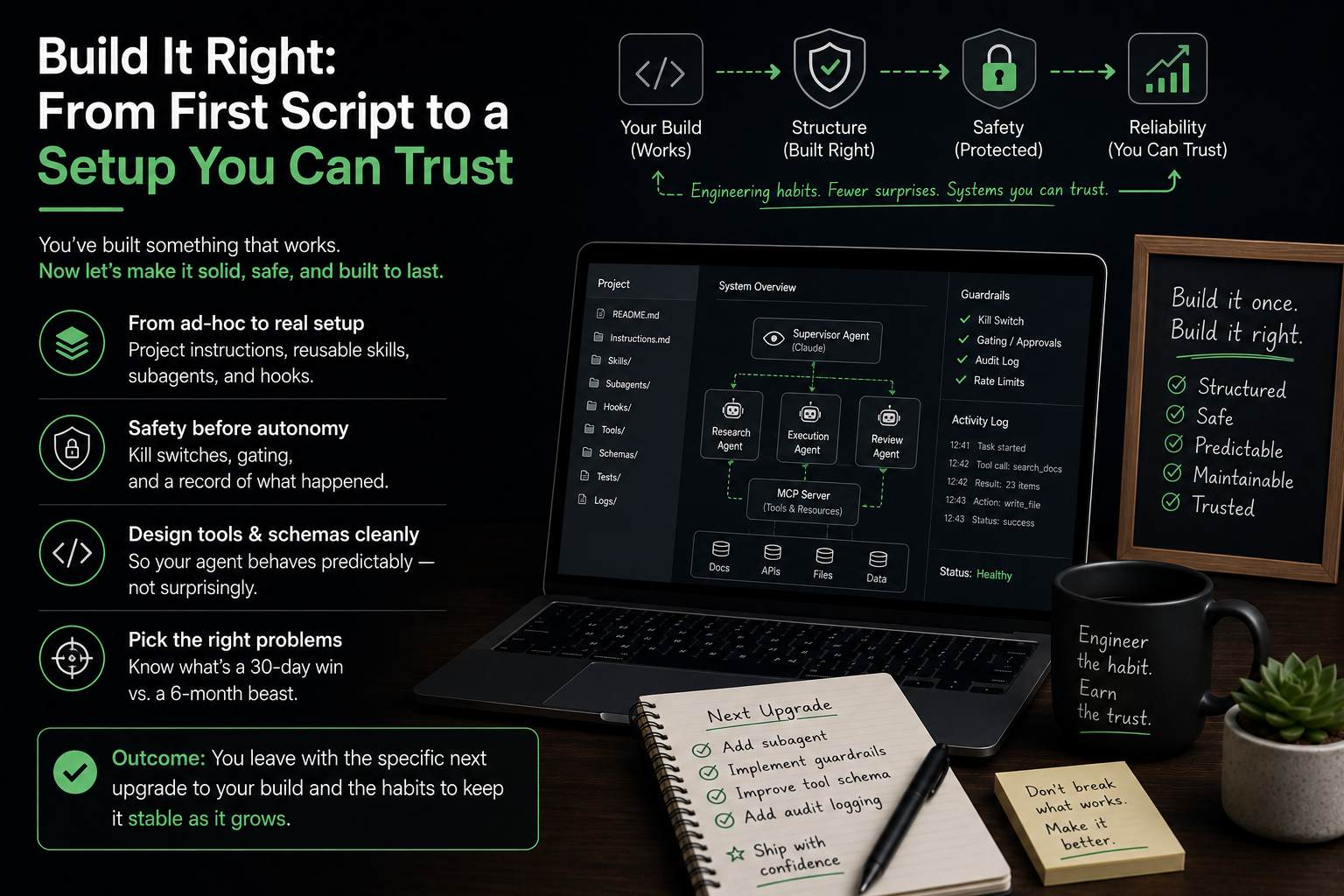
Structured tool schemas. Safety gating. Audit logging. Versioned modules. Supervision layers. Not one-off prompts.
That instinct comes from 25 years across utility, FDA-regulated, SSAE-16/SOC, and DCAA/DCMA-compliant environments — six of them as Senior Systems Administrator at a publicly traded utility. I've designed DR plans that passed SSAE-16 audit and held 99.99% uptime for an FDA-regulated client under SLA.
Most shipped AI looks like it was built by people who never had to answer for a failed DR test: no audit trail, no kill switch, no separation between read and mutating operations, no plan for when the agent halts, loops, or hallucinates state. Those instincts transfer directly. They're the differentiator.
$ Today: AI Systems Engineer at a managed IT firm serving municipalities across New England — building MCP-based integrations for helpdesk, compliance, and workflow systems, and managing their Claude Teams account. Government-adjacent operations where controls aren't optional.
services
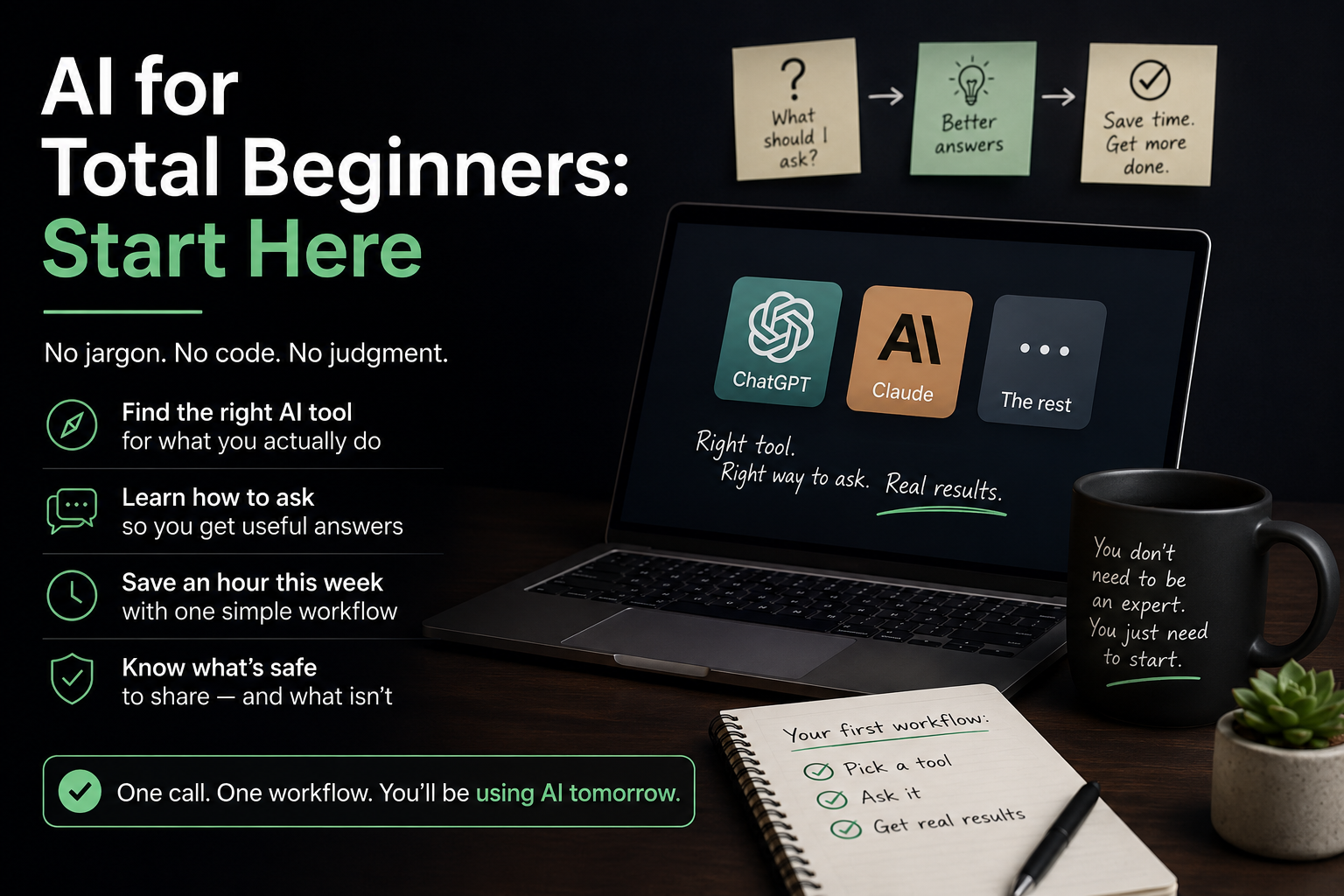
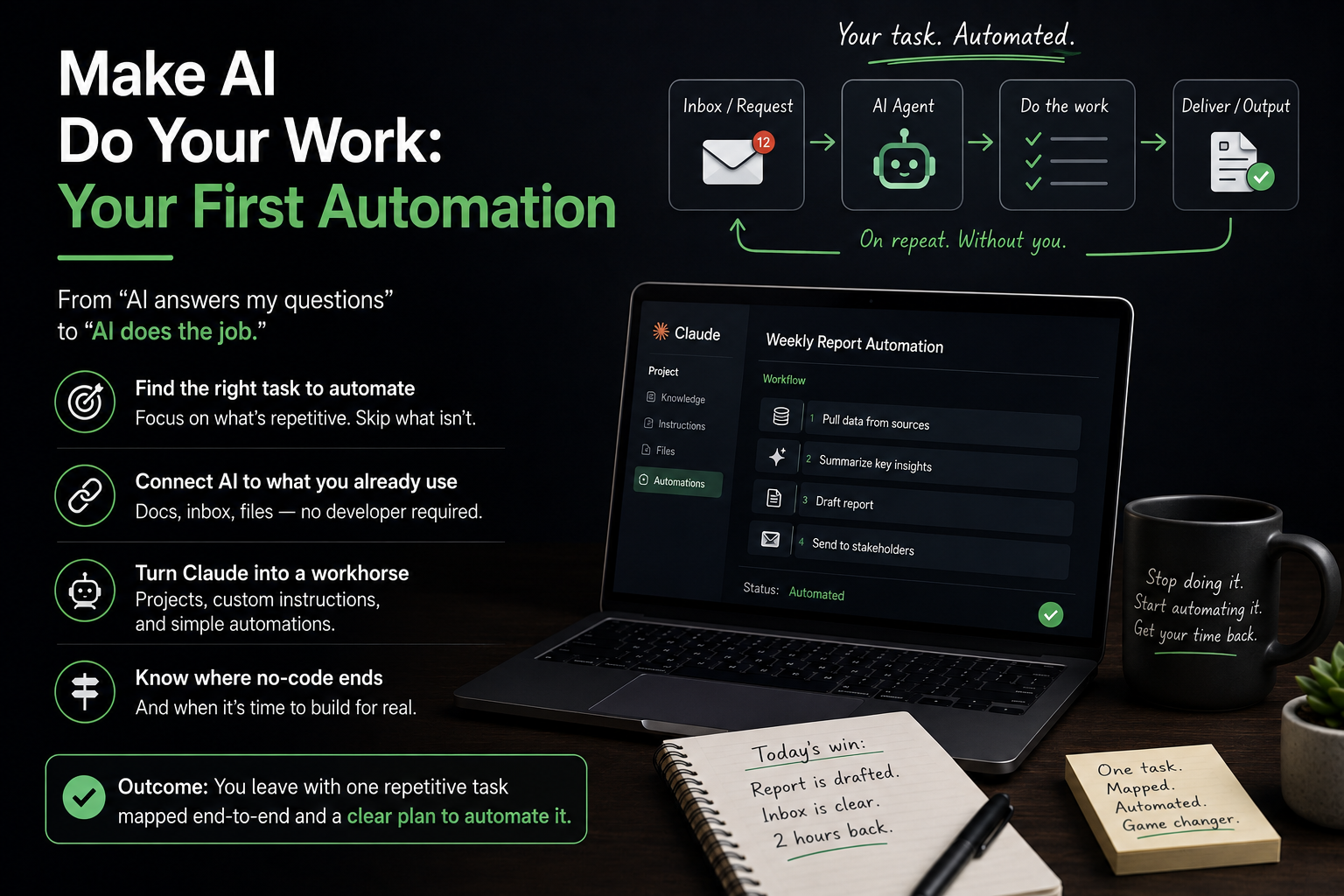
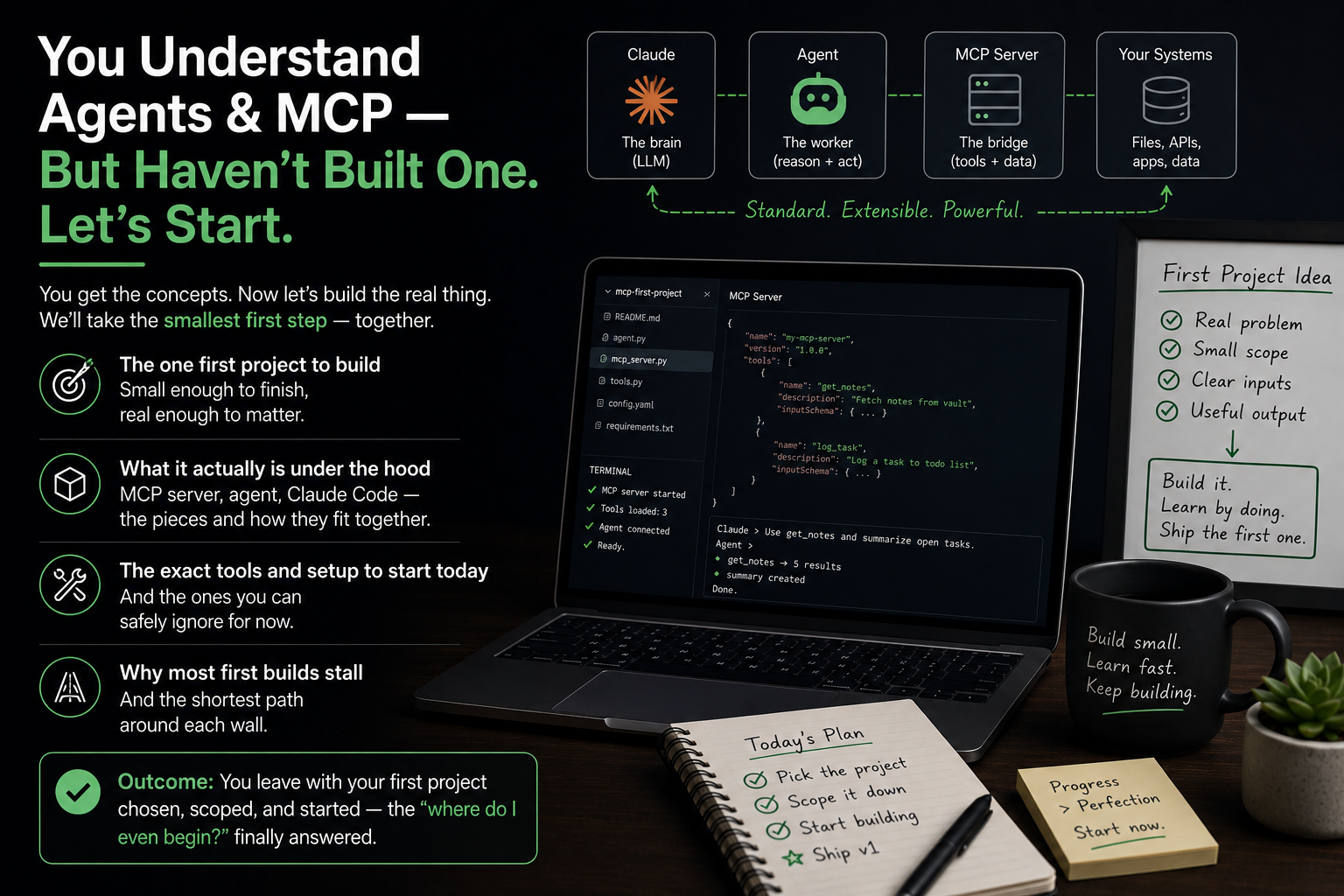
I work better in 30-minute calls than 30-page proposals. Most calls end with a written-down next step — what to build, what to skip, what to instrument before you ship.
Outcome: a concrete next-step decision — schema, transport, scope, or staging — written down before the call ends.
Outcome: a sketched safety architecture, named failure modes, and the 2–3 things to instrument before you run again.
Outcome: a scoped path forward — what's safe to pilot in 90 days, what to defer, and the 3 controls you shouldn't skip.
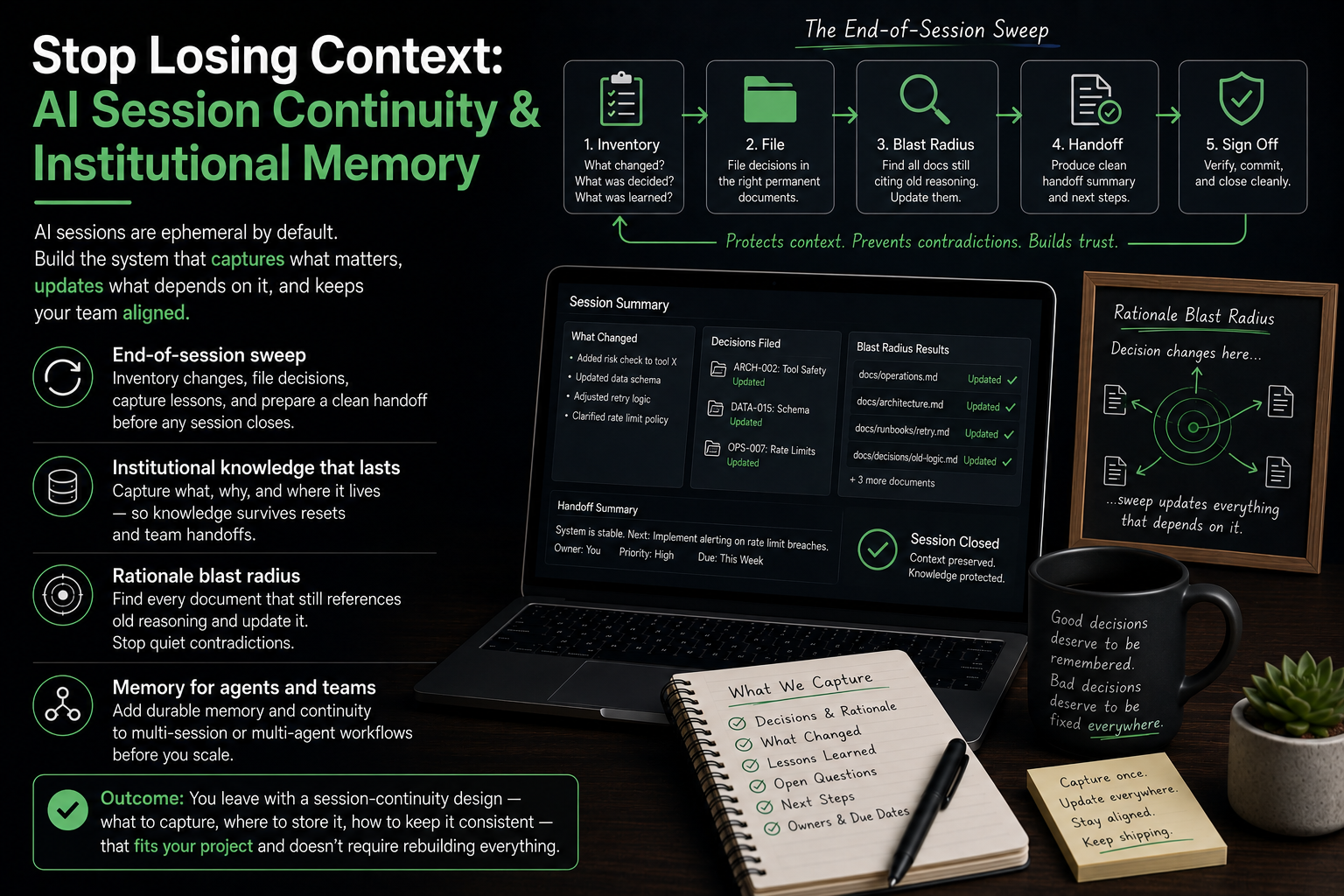
Outcome: a session continuity design — what to capture, where to store it, how to keep it consistent — that fits your existing project structure.
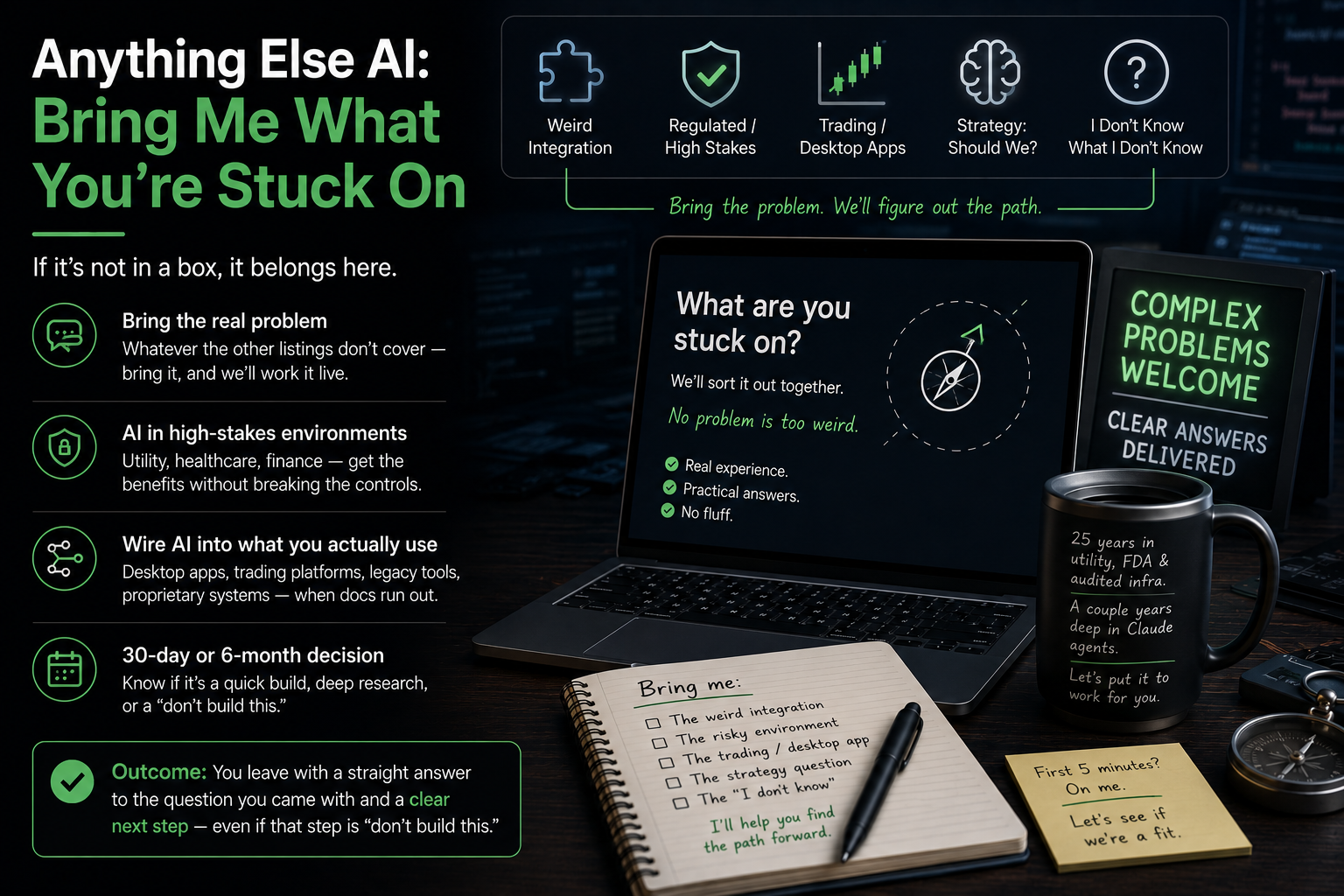
Outcome: a sharper picture of where AI helps, where it doesn't, and what the next 30 days should look like. (I'm not selling a strategy — the engineering is the point.)
experience
MCP-based integrations for helpdesk, compliance, and workflow automation. Custom skill authoring, multi-agent orchestration, n8n workflows. Managing the org's Claude Teams account.
IT/OT server infrastructure: AD, DNS/DHCP, PKI, virtualization, storage, capacity planning, backup & DR. Designed DR plans that passed SSAE-16 audit. Maintained 99.99% uptime for an FDA-regulated client under SLA.
Managed cloud/hosting ops across SAP, SQL, Linux, and Windows — deployments, upgrades, incident resolution, DR. AWS Architecture training.
SAP Business One DI/UI API development, .NET applications, T-SQL, Crystal Reports. Built a Job Costing system conforming to DCAA/DCMA guidelines. Led a 6-month SAP deployment as PM.
Full IT oversight across multiple sites. Rebuilt the network (Cisco/SonicWall), held 99.99% uptime under FDA-regulated SLAs, designed automated offsite backup/failover, led a successful SSAE-16 audit. Cut scanning hardware costs $25K+/yr with VB.NET automation.
Earlier roles (2002–2007): IT recruiter, IT consultant, enterprise-software support, desktop support & implementation. Available on request.
contact
Building an MCP server, designing an agent loop, or deploying Claude in a regulated environment? That's the conversation I want to have. First five minutes are on me if it's not a fit.